Exploring the Early Days of a Digital Revolution
In the early 2000s, platforms like Friendster quietly reshaped the internet. Before Facebook became a household name and before MySpace defined online culture, Friendster introduced the revolutionary concept of digital identity and social networking. Today, virtual reality—particularly VRChat—stands at a similar crossroads. To many observers, VRChat represents the “Friendster era” of the metaverse: experimental, niche, and filled with untapped potential.
While mainstream audiences have yet to fully embrace immersive virtual worlds, early adopters are already shaping what may become the next evolution of human interaction. Just as social media transformed communication, VRChat is redefining presence, community, and creativity in the digital age.
🌐 A Digital Frontier in Its Infancy
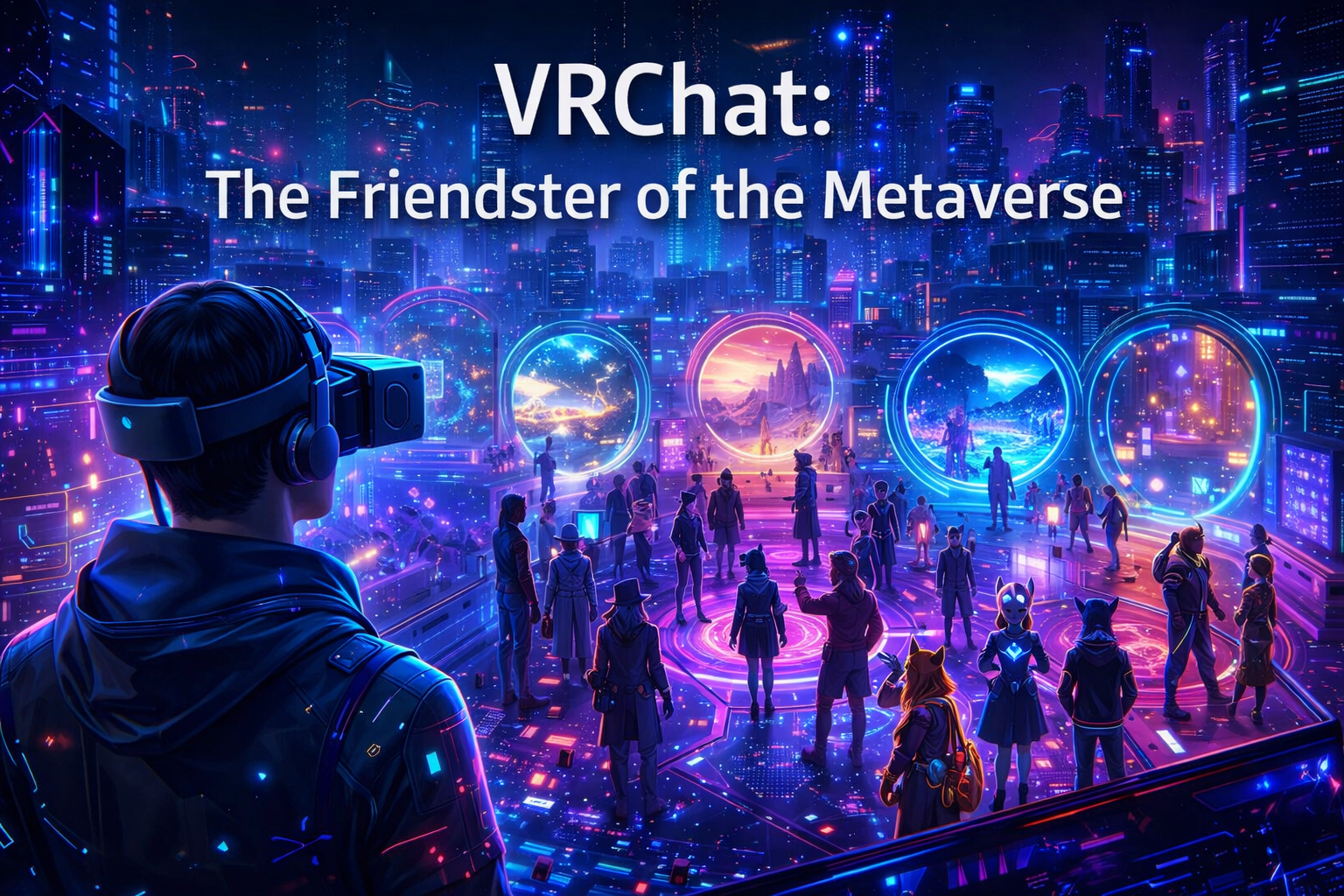
VRChat is more than a game—it is a social platform where users create avatars, explore virtual worlds, and interact in real time. Built largely on user-generated content, it offers unprecedented creative freedom. From futuristic cities to serene temples and interactive nightclubs, VRChat enables experiences that transcend physical limitations.
This grassroots ecosystem mirrors the early days of Friendster, when online identities were still a novel concept. Like its predecessor, VRChat thrives on community-driven innovation, fueled by passionate creators and curious explorers rather than corporate interests.
Much like social media in 2003, the platform remains on the cusp of mainstream recognition.
📜 The Friendster Analogy
The comparison between VRChat and Friendster highlights the platform’s current stage of evolution.
| Era | Social Media Evolution | Metaverse Evolution |
|---|---|---|
| 2003–2004 | Friendster: Early adoption and experimentation | VRChat: Emerging social VR ecosystem |
| 2005–2008 | MySpace: Creativity and customization | Expanding metaverse platforms |
| 2009–2012 | Facebook: Mainstream global adoption | Standardized immersive environments |
| 2015–Present | TikTok & Instagram: Creator economies | Immersive social VR and digital identity |
Friendster introduced the concept of digital identity; VRChat introduces digital presence. Instead of static profiles, users embody avatars and interact within fully immersive environments.
🎭 The Power of User-Generated Worlds
One of VRChat’s defining strengths is its emphasis on creativity. Using tools such as Unity, Blender, and Substance Painter, creators build interactive worlds and custom avatars. This level of freedom is reminiscent of MySpace, where users customized their profiles with HTML and music playlists.
However, VRChat goes far beyond aesthetics. It allows individuals to construct entire universes, hosting events, performances, and communities within them.
Notable features include:
- Custom-built social spaces and virtual cities.
- Live concerts, language exchanges, and networking events.
- Educational environments and cultural showcases.
- Unique avatar designs that reflect personal identity.
In many ways, VRChat represents the democratization of digital world-building.
🌍 A Hidden Subculture on the Rise
Despite its innovation, VRChat remains a relatively underground phenomenon—much like early social media. Within its virtual landscapes exists a thriving subculture of developers, artists, gamers, educators, and technologists.
This hidden world offers:
- Global connections without geographic limitations.
- Inclusive environments for self-expression.
- Creative communities fostering collaboration and innovation.
- Social experiences that rival—and sometimes surpass—physical interaction.
For early adopters, VRChat feels less like a game and more like a glimpse into the future.
💡 Economic Potential in the Metaverse
Although VRChat does not currently offer a direct affiliate program, its ecosystem presents numerous monetization opportunities. As the metaverse expands, entrepreneurs and creators are discovering innovative ways to generate income.
Emerging Opportunities
- Content Creation: Reviews, tutorials, and virtual world showcases.
- Hardware Affiliates: Promoting VR headsets and accessories.
- Virtual Events: Hosting meetups, conferences, and exhibitions.
- Marketing Services: Promoting worlds, avatars, and indie developers.
- Consulting: Advising organizations on entering virtual spaces.
- Digital Products: Guides, courses, and educational materials.
- Community Building: Premium memberships and exclusive experiences.
As with early social media influencers, those who establish credibility now may reap substantial rewards as adoption accelerates.
🚀 Bridging Reality and Virtual Worlds
VRChat’s impact extends beyond entertainment. It has become a platform for language learning, professional networking, and cultural exchange. Virtual meetups and events demonstrate its potential to transform communication in fields ranging from education to business.
For innovators and community organizers, VRChat offers a powerful tool to bridge the gap between the physical and digital worlds. Whether hosting virtual conferences or showcasing indie developers, its applications continue to expand.
⚠️ Challenges on the Path to Mainstream Adoption
Like Friendster before it, VRChat faces hurdles that must be overcome to achieve widespread acceptance.
Key Challenges
- Limited mainstream awareness.
- Hardware accessibility and cost barriers.
- Perceptions and misconceptions about virtual reality.
- Platform dependency and technological limitations.
- Monetization structures that are still evolving.
However, these challenges mirror those faced by early social media platforms—many of which ultimately reshaped global communication.
🔮 The Future of VRChat and the Metaverse
If history is any guide, VRChat may represent the earliest chapter of a transformative technological era. As virtual reality becomes more accessible and immersive technologies continue to evolve, platforms like VRChat are poised to play a central role in the digital landscape.
The trajectory may unfold as follows:
- Short Term (1–3 Years): Continued growth among enthusiasts and creators.
- Mid Term (3–7 Years): Wider adoption driven by improved hardware and accessibility.
- Long Term (7–15 Years): Integration into everyday life for communication, education, and commerce.
Those who recognize its potential today may become pioneers of tomorrow’s metaverse.
🌟 Conclusion
Just as Friendster laid the foundation for modern social media, VRChat is laying the groundwork for immersive digital interaction. It is a frontier of experimentation, creativity, and community—an ecosystem where innovation thrives before mainstream adoption arrives.
For early adopters, creators, and visionaries, the message is clear: the metaverse is no longer a distant concept. It is already here, quietly evolving within virtual worlds.
VRChat is not merely a platform—it is the Friendster of the metaverse, and the future is being built inside it.