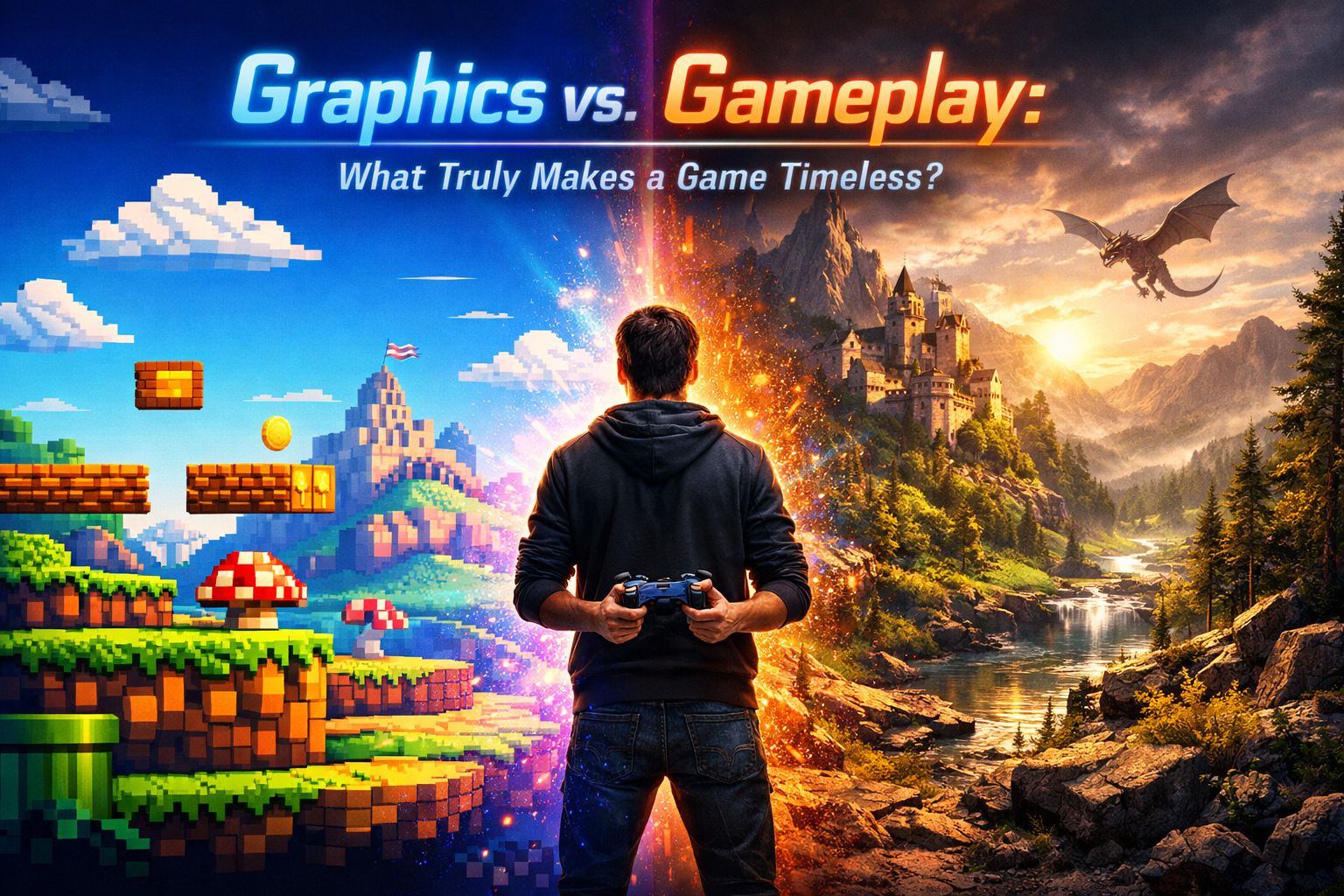
Being wooed by the latest graphics and visual spectacle has long been a common vice among gamers. Let’s face it—great graphics help sell games. We often judge a book by its cover, reacting instinctively to stunning visuals. This tendency likely stems from the sheer number of entertainment options competing for our attention. With so many video games, books, movies, and forms of music vying for our time and money, we are compelled to make quick decisions about where to invest both.
Graphics drive the marketing engine. They are usually the first aspect people wonder about when a new game is announced. They are also the easiest element to improve from one generation to the next. As gaming hardware continues to advance each year, so do graphic creation tools. These improvements make it possible for even small independent studios to produce visuals that surpass those of larger developers from just five years ago. However, advancements in other aspects of game development—such as music, storytelling, and gameplay—are not as easily achieved. Consequently, if a game lacks impressive visuals, it may be perceived as a project that hasn’t been properly invested in.
Graphics undoubtedly enhance enjoyment. They provide eye-catching moments and awe-inspiring spectacles while increasing immersion by presenting environments that feel realistic. In many cases, they create vivid worlds that leave little for the imagination, effectively spoon-feeding imagery directly to the player.
Yet experienced gamers understand that graphics aren’t everything. Over time, the shine fades. What once seemed visually groundbreaking is eventually overshadowed by something newer and more advanced. If a game’s primary selling point is its graphics alone, it may struggle to stand the test of time. Three-dimensional games, in particular, can be vulnerable to this fate. Because they strive for realism, they often age poorly, eventually appearing as dated imitations of reality. By contrast, two-dimensional games rarely attempt realism and instead embrace stylized, often cartoonish designs. Cartoons themselves have changed little over the decades. Aside from higher resolutions, a modern mobile 2D game may not look drastically different from a classic SNES title.
At the end of the day, a game is meant to be fun. While graphics can spark interest, a compelling concept and engaging gameplay are what keep players invested. Consider Super Mario Bros. 3. For its time, it featured stunning graphics for the 8-bit NES. Even today, its visuals remain charming and appealing. However, it is the refinement of its gameplay that truly sets it apart. Precision platforming, clever level design, and hidden secrets demonstrate how the developers maximized limited resources while eliminating unnecessary excess.
Another excellent example is Ultima VI. Though it is a top-down RPG limited to 256 colors, its artwork remains vibrant and effective. More impressively, it offers a level of interactivity that rivals—and in some respects surpasses—modern RPGs such as The Elder Scrolls IV: Oblivion and The Elder Scrolls V: Skyrim. Nearly every object in its world can be manipulated. Players can interact with musical instruments, for instance, and even play scales within the game—an extraordinary level of freedom for its era.
Eventually, many gamers reach a point where dazzling graphics alone lose their appeal. A sense of emptiness can emerge when visual brilliance is not supported by meaningful substance. Enjoying games for their eye candy is natural, but like many aspects of life, true value lies beneath the surface. Digging deeper reveals experiences that endure long after technological trends fade.
Ten years from now, people rarely remember a game solely for its graphics, as visuals inevitably become dated. However, gameplay, storytelling, and music possess the power to stand the test of time—ensuring that truly great games remain unforgettable.